

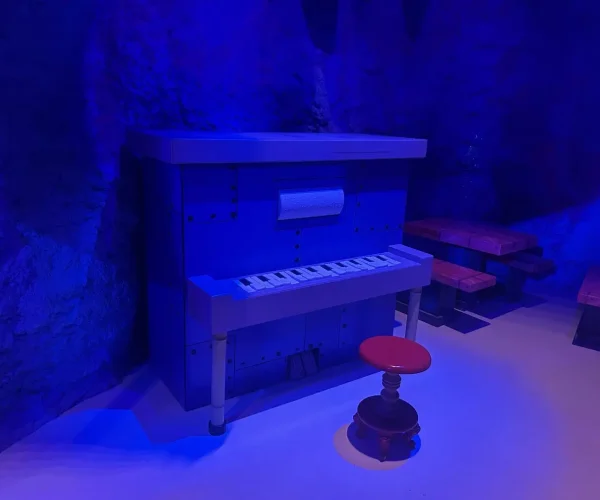
Self Playing Piano
The Self Playing Piano is a mechanical marvel that turns curiosity into music. Built for Nickelodeon Play Istanbul, it invites visitors to take a seat and watch an old-world player piano spring to life entirely on its own. Behind the keys, two synchronised motors drive a rotating cylinder studded with pins, a mechanism that reaches back to the music boxes and automatic pianos of the nineteenth century. As the cylinder turns, the pins trip the keys in precise sequence and a complete melody fills the room without a single human touch. It is a hands-on lesson in how motion, timing and mechanism combine to make art, and a reminder that automation has been enchanting audiences for well over a hundred years.
Visitor Experience
The experience begins the moment a visitor sits down on the stool. A presence sensor detects them and wakes the instrument, so the performance feels like a personal response rather than a looping recording. The keys begin to move on their own, dancing in perfect time with the melody, and visitors instinctively lean in to trace the connection between the mechanism they can see and the music they can hear. Each activation can play a different piece, so no two visits sound quite the same, encouraging guests to sit again just to discover what the piano will play next. Younger children are captivated by the keys that seem to move by magic, while older visitors recognise the charm of a self-playing instrument brought back to life.
How It Works
The Self Playing Piano runs on a compact, fully mechanical system that visitors can follow step by step:
- Presence detection. A sensor tied to the stool registers when someone sits down and signals the system to begin.
- Two-motor drive. One motor spins a horizontal cylinder while a second drives the key mechanism, keeping both perfectly in sync.
- Pinned cylinder. Pins set into the rotating cylinder act like a physical score; as the cylinder turns, each pin lifts the lever for its note at exactly the right moment.
- The performance. The levers release the keys in sequence, the keys sound their notes, and a full piece of music plays while the keys visibly move in time.
Because the melody is encoded in the arrangement of the pins, the exhibit reveals the same principle behind music boxes and nineteenth-century player pianos: a carefully engineered mechanism can store and replay music with no screens, no electronics and no performer.
Target Age
- From 4
 EN
EN  ES
ES  TR
TR  AR
AR